1 October 2026·30 min read
22 May 2026•Sokudo Electic India
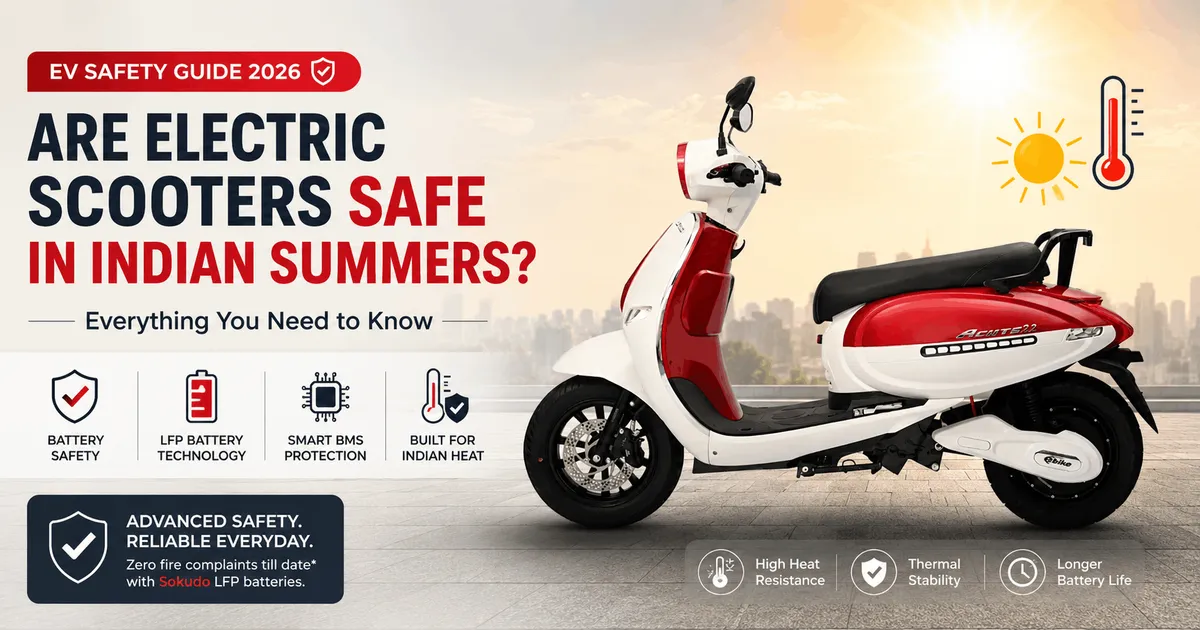
Electric scooters are rapidly becoming a major part of India’s urban mobility ecosystem, but one question continues to appear across Google searches, AI Overviews, forums, and buyer discussions: Are electric scooters safe in Indian summers?
The short answer is yes — modern electric scooters can be safe in Indian summer conditions when they use advanced battery technology, proper thermal management systems, and smart charging protection. However, battery quality, charging habits, and heat management play a major role in long-term EV safety and reliability.
As temperatures in many Indian cities regularly cross 40°C during peak summer months, buyers are becoming more aware of battery overheating, charging safety, thermal stability, and fire protection in electric scooters. This has also increased demand for electric scooters that use safer battery chemistry like LFP (Lithium Iron Phosphate) batteries and smart Battery Management Systems (BMS).
Research-backed industry reports from India’s EV sector have shown that consumer awareness around EV battery safety has increased significantly over the last few years. According to industry coverage from Mobility Outlook, safer battery technology and thermal management are becoming key decision-making factors for electric scooter buyers in India.
Today, modern EV manufacturers are designing electric scooters specifically for Indian climate conditions by improving battery safety systems, thermal protection, charging intelligence, and real-time monitoring technologies.
Indian summers create extreme operating conditions for all vehicles, including electric scooters. Long exposure to heat, traffic congestion, direct sunlight, and high charging temperatures can increase stress on batteries and electronic systems if the scooter lacks proper safety engineering.
This is one reason why electric scooter battery safety has become a major discussion point among EV buyers, especially first-time riders and urban commuters. Modern buyers now actively search for information related to electric scooter overheating, EV battery fire safety, and thermal protection systems before purchasing an electric scooter.
In crowded Indian cities, electric scooters often operate in:
These conditions naturally increase battery heat generation and thermal load during daily usage.
However, it is important to separate fear from technical reality. Not every electric scooter faces overheating risks. Modern EV safety depends largely on:
Well-engineered electric scooters with proper thermal management and advanced battery systems are designed to operate safely even in demanding Indian weather conditions.
Battery safety has become one of the biggest concerns in India’s electric vehicle industry, especially during extreme summer temperatures. As EV adoption continues to rise, buyers are becoming more aware of thermal stability, charging safety, and battery reliability before purchasing an electric scooter. Questions around electric scooter overheating and EV fire safety are now common across Google searches, AI Overviews, forums, and buyer discussions.
Several incidents over the past few years have increased public awareness around EV battery safety. One widely discussed case involved an electric scooter catching fire in
Pune, where a father and son reportedly escaped within seconds after the scooter suddenly caught fire while parked. The incident quickly went viral and intensified conversations around thermal runaway, battery management systems, and electric scooter safety standards in India.
You can read the incident coverage here:
News18 Report on Pune Electric Scooter Fire Incident
This growing awareness is one reason why safer battery chemistry like LFP (Lithium Iron Phosphate) batteries is gaining strong attention in the Indian EV market. LFP batteries are considered more thermally stable and resistant to overheating compared to many traditional lithium battery setups. They are specifically better suited for Indian climate conditions where temperatures can frequently cross 40°C during peak summer months.
Benefits of LFP battery electric scooters include:
Modern EV brands are now prioritizing thermal management systems, CANBUS monitoring, smart Battery Management Systems (BMS), and fire-resistant battery structures to improve commuter safety and long-term reliability.
Brands like Sokudo India Battery Technology are focusing heavily on smart fireproof LFP battery technology designed specifically for Indian urban commuting conditions. Sokudo highlights LFP battery safety, thermal stability, and practical long-term reliability as core parts of its EV ecosystem, and the company states that it has recorded zero fire complaints till date across its LFP battery platform.
Like all lithium-based batteries, electric scooter batteries generate heat during charging and discharging cycles. This is a normal part of battery operation. However, excessive heat without proper management can reduce battery efficiency, impact long-term lifespan, and increase safety risks.
During high-temperature conditions, EV batteries may experience:
This is why modern electric scooters now use advanced Battery Management Systems (BMS) to continuously monitor temperature, voltage, charging cycles, and battery health in real time.
Battery chemistry also plays a major role in overall EV safety. Different lithium battery types behave differently under thermal stress.
Riders can also significantly improve battery lifespan by following proper charging habits, avoiding extreme heat exposure, and maintaining healthy charging cycles. Practical battery maintenance practices such as avoiding complete battery drain, using certified chargers, and charging in ventilated areas can help extend long-term battery performance and reliability. Sokudo also shares detailed battery care and charging practices in its guide on How to Extend the Battery Life of Your Electric Scooter.
NMC (Nickel Manganese Cobalt) batteries are commonly used in EVs because of their energy density, but they generally require stronger thermal management systems.
LFP (Lithium Iron Phosphate) batteries are considered more thermally stable and safer in high-temperature environments. They are increasingly preferred in India because they offer:
This is one reason why many modern EV brands are shifting toward LFP battery technology for Indian road and weather conditions.
Thermal runaway is one of the most commonly discussed terms in electric vehicle safety conversations. It refers to a chain reaction where excessive heat inside a battery causes uncontrollable temperature rise.
In simple terms, thermal runaway can occur when:
Modern electric scooters reduce this risk using:
Today’s EV safety systems are significantly more advanced than earlier electric scooter generations. Modern battery architecture and improved testing standards have made electric scooters far safer and more reliable for urban commuting.
One of the biggest shifts happening in India’s EV industry is the growing adoption of LFP battery technology. LFP batteries are now widely regarded as one of the safest battery chemistries for electric scooters because of their thermal stability and long-term reliability.
LFP stands for Lithium Iron Phosphate, a battery chemistry known for:
For Indian weather conditions, these benefits become extremely important because electric scooters are regularly exposed to:
Research-backed EV reports and battery experts increasingly recommend LFP battery systems for countries with hotter climates because they remain more stable under thermal stress.
Benefits of LFP battery electric scooters include:
Brands like Sokudo India are using smart fireproof LFP battery technology across multiple electric scooter models to improve safety and commuter reliability in Indian conditions.
Modern electric scooters use multiple safety layers to prevent overheating and improve long-term battery reliability. This is one reason why newer EV scooters are significantly safer than older electric mobility systems.
One of the most important components is the Battery Management System (BMS). A BMS continuously monitors:
If abnormal conditions are detected, the system can automatically regulate charging or limit power output to protect the battery.
Many advanced EV scooters also use CANBUS systems for real-time communication between battery systems and vehicle electronics. These smart monitoring systems improve:
Sokudo electric scooters use CANBUS-enabled monitoring systems and advanced safety features designed for practical urban commuting and Indian road conditions. Sokudo Features
Even the safest electric scooter can face battery stress if used incorrectly. Many overheating concerns actually result from improper charging habits or poor battery maintenance.
Some common mistakes include:
After long rides, batteries remain warm. Charging immediately can increase thermal stress. Allowing the battery to cool slightly before charging is generally recommended.
Non-certified chargers can affect charging regulation and battery protection systems. Always use manufacturer-approved chargers.
Long exposure to direct sunlight can increase battery temperature significantly, especially during peak summer afternoons.
Unusual heating, charging delays, sudden power drops, battery swelling, or inconsistent range should never be ignored because these can indicate early battery health issues.
Identifying these warning signs early can help prevent long-term battery damage and improve overall electric scooter safety during daily commuting.
Riders should also pay attention to declining charging efficiency, reduced pickup performance, or faster battery drain over time, as these may indicate the need for battery inspection or replacement. Sokudo also explains common battery warning signs and replacement indicators in its guide on Top 5 Reasons Why You Might Need a Battery Replacement.
Proper charging habits and basic battery care can significantly improve electric scooter safety and battery lifespan.
Electric scooters can operate safely in Indian summers when riders follow smart usage practices and proper charging behavior. Small precautions can help improve battery performance and long-term reliability.
Recommended summer EV safety practices include:
Avoid charging in enclosed, poorly ventilated spaces with excessive heat buildup.
Modern BMS systems provide charging protection, but following recommended charging practices is still important.
Parking in shaded areas helps reduce battery temperature exposure during summer afternoons.
Avoid excessive fast charging or repeated partial charging cycles unnecessarily.
Routine battery diagnostics help identify performance issues before they become serious problems.
These simple practices improve both battery efficiency and overall EV safety.
This is one of the most searched EV safety questions online today.
The reality is that all vehicles carry some level of fire and heat-related risk, including petrol scooters. Petrol vehicles contain highly flammable fuel systems and also generate significant engine heat during operation.
The key difference is not electric vs petrol it is:
Modern electric scooters with proper thermal protection, certified battery systems, and intelligent charging control are designed to meet advanced safety standards.
India has also strengthened EV safety regulations through standards like AIS-156, which focus on:
As EV technology matures, electric scooter safety standards continue to improve rapidly across the industry.
The best electric scooter for Indian summers is one that focuses on thermal stability, battery safety, and practical urban commuting reliability.
Before buying an electric scooter, riders should prioritize:
Low-maintenance electric scooters with advanced safety systems are becoming increasingly popular among Indian urban commuters because they offer better reliability and peace of mind.
Electric scooters like the Sokudo Select 2.2, Sokudo Rapid 2.2, and Sokudo Plus focus on practical urban mobility with features such as:
These features help improve reliability and rider confidence during Indian summer conditions.
So, are electric scooters safe in Indian summers?
Yes, modern electric scooters can absolutely be safe for Indian weather conditions when they use advanced battery systems, smart thermal protection, and proper safety engineering. The real factors that matter are battery chemistry, thermal management, charging quality, and manufacturer reliability.
LFP battery electric scooters are increasingly becoming the preferred choice because they provide better thermal stability, safer operation, and improved long-term reliability in high-temperature conditions.
As India’s EV market continues to grow, riders are becoming more informed about battery safety, charging practices, and heat management. This is helping push the industry toward safer and more advanced electric mobility solutions.
For riders looking for reliable urban commuting, practical battery safety, and modern EV technology, brands like Sokudo India are focusing on commuter-friendly electric scooters designed specifically for Indian roads and climate conditions.
Are electric scooters safe in 45°C Indian summer temperatures?
Yes, modern electric scooters with proper thermal management systems and LFP battery technology are designed to operate safely in high Indian summer temperatures.
Which EV battery is considered safest for Indian conditions?
LFP (Lithium Iron Phosphate) batteries are widely considered among the safest EV battery types because of their better thermal stability and heat resistance.
Can electric scooters overheat in traffic?
Like all vehicles, electric scooters generate heat during operation, but advanced Battery Management Systems (BMS) help regulate temperature and prevent overheating.
Does summer heat reduce electric scooter battery life?
Extreme heat can affect battery efficiency over time, but proper charging practices and thermal management systems help minimize long-term impact.
How can I improve electric scooter battery safety in summer?
Avoid direct sunlight parking, use certified chargers, charge in ventilated areas, and follow manufacturer-recommended charging practices.