1 October 2026·30 min read
4 November 2025•Rishu
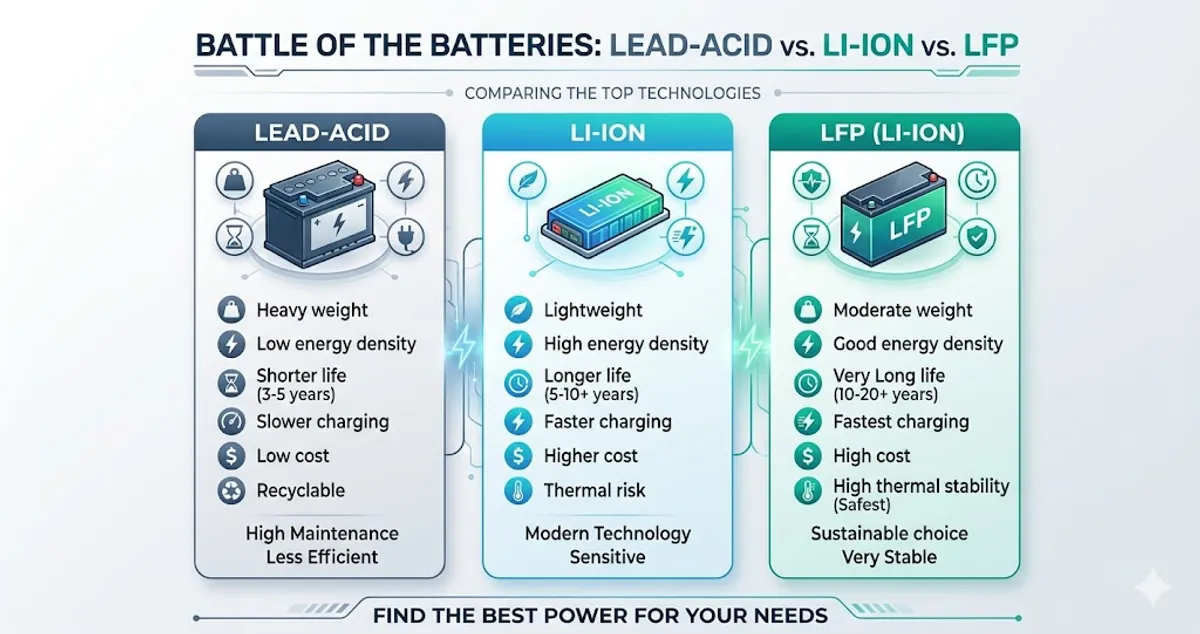
Choosing between Lead-Acid, Lithium-Ion, and LFP batteries depends on your budget, performance needs, and safety priorities. Lead-Acid is cheap upfront but heavy and short-lived (3–5 years). Lithium-Ion is lighter and lasts 8–10 years but has fire risks. LFP (Lithium Iron Phosphate) is the best choice: longest lifespan (10+ years), zero fire risk, and maintenance-free. Sokudo Electric Scooters use only LFP batteries in all their models.
If you are confused about choosing between Lead-Acid vs. Lithium-Ion batteries for your electric scooter? You are not alone. Both battery types have advantages and disadvantages, and the right choice directly impacts your scooter’s range, charging time, and long-term costs.
For electric vehicles like scooters, the battery is the most critical component. It determines how far you can ride, how long you wait for a charge, and how often you need replacements. With multiple options available—Lead-Acid, standard Lithium-Ion, and the newer LFP chemistry—making an informed decision is essential. This guide breaks down each battery type using the latest industry data and expert recommendations.
Lead-acid batteries have powered vehicles for over a century. They remain common in entry-level scooters due to their low initial price.
Disadvantages:
Expert Verdict: Lead-acid only makes sense for very tight budgets or short, low-speed trips under 15 km per day. For daily commuting, the frequent replacements and poor performance make it more expensive in the long run.
Lithium-ion batteries revolutionized electric vehicles. They offer major performance gains over lead-acid and are found in most modern EVs.
Disadvantages:
Expert Verdict: Lithium-ion is a solid choice for most riders who value performance and low weight. However, the fire risk and lower lifespan compared to LFP make it less ideal for safety-conscious users.
Important Update: LFP (Lithium Iron Phosphate) batteries have emerged as the gold standard for electric scooters. They combine the best features of both Lead-Acid and standard Lithium-Ion while eliminating major safety and longevity concerns.
Sokudo Electric Scooters exclusively use LFP (Lithium Iron Phosphate) removable batteries in their entire product line. Every Sokudo scooter offers the highest safety standard, longest lifespan, and best total cost of ownership. To explore all LFP-powered Sokudo models, visit the official Sokudo products page.
| Feature | Lead-Acid | Standard Lithium-Ion | LFP (Sokudo) |
| Upfront Cost | Low | Medium-High | Medium |
| Lifespan | 3–5 years | 8–10 years | 10+ years |
| Charging Time | 6–10 hours | 4–5 hours | 4–5 hours |
| Weight | Very Heavy | Light | Light |
| Safety | Moderate (acid leaks) | Moderate (fire risk) | Highest (no fire) |
| Maintenance | Regular required | None | None |
| Best For | Budget, short trips | Daily commuting | All riders |
Proper battery care dramatically extends the life of any battery type. For LFP and lithium-ion batteries, follow these expert guidelines:
For a detailed step-by-step maintenance guide, read our complete article: How to Extend the Battery Life of Your Electric Scooter. This guide covers daily habits, seasonal storage, and common mistakes that ruin batteries.
Even the best LFP batteries eventually reach end-of-life. Recognizing the warning signs early can prevent unexpected breakdowns. Signs you need a new battery include:
If you experience any of these symptoms, a replacement may be necessary. Learn more in our detailed guide: Top 5 Reasons Why You Might Need a Battery Replacement. This article helps you diagnose battery issues and choose the right replacement.
Making an informed battery decision requires looking beyond marketing claims. Independent research from government and academic sources consistently supports LFP as the superior chemistry for electric scooters.
According to the U.S. Department of Energy: EV Battery Lifespan and Recycling, official government data shows that LFP batteries retain over 80% of their original capacity after 5,000 charge cycles—equivalent to 10+ years of daily use. In comparison, standard lithium-ion batteries typically degrade to 80% capacity after just 2,000–3,000 cycles, while lead-acid batteries often fail before 1,000 cycles. The same source emphasizes that proper battery management systems (BMS) and thermal stability are critical for safety, areas where LFP significantly outperforms other chemistries.
Further technical analysis from Battery University: BU-205 – Types of Lithium-ion Batteries confirms that LFP chemistry has the lowest internal resistance and highest thermal runaway threshold (over 270°C) compared to standard lithium-ion (150–180°C). This means LFP batteries are virtually immune to the fire risks that have led to recalls in many standard lithium-ion powered devices. The report also notes that LFP's flat discharge curve provides consistent power output until the battery is nearly empty, unlike lead-acid which suffers from voltage sag under load.
These authoritative sources collectively conclude that while lead-acid remains the cheapest upfront, its short lifespan and poor energy density make it the most expensive over time. Standard lithium-ion offers a middle ground, but LFP delivers the best long-term value, safety, and reliability—exactly why Sokudo has chosen LFP for all its electric scooters.
Choose Lead-Acid only if you have a very tight budget, ride very short distances (under 15 km daily), and accept replacing the battery every 2–3 years. This is suitable for occasional, low-speed use only.
Choose Standard Lithium-Ion if you want good performance and longer life than lead-acid, but note the small fire risk and lower lifespan compared to LFP. This is a reasonable mid-range option.
Choose LFP (Lithium Iron Phosphate) if you want the best combination of safety, longevity, light weight, and fast charging. LFP is the ideal choice for daily commuters, delivery riders, students, and anyone who values peace of mind.
Sokudo Electric Scooters equip every vehicle with premium LFP removable batteries. You get a quick 4–5 hour charging time, a lifespan exceeding 10 years, zero fire risk, and no maintenance hassles. You get back on the road faster, safer, and more reliably than with any other battery type.
Ready to upgrade your ride? Explore the full range of LFP-powered Sokudo scooters here: Sokudo India Products
Experience the future of electric mobility with Sokudo—where safety meets performance and your battery lasts for over a decade.