2 June 2026•Sokudo Electric India
Published: June 2, 2026 | Last updated: June 2, 2026 | By: Sokudo Electric India Editorial Team
Can You Ride an Electric Scooter in Rain? Complete Monsoon Guide for Indian Riders (2026)
If you own an electric scooter in India, this question has almost certainly crossed your mind the moment the first dark clouds rolled in. Every year, as June approaches and the skies over Mumbai, Bengaluru, Delhi, and Pune begin to open up, thousands of EV owners find themselves second-guessing their morning commute.
Can you actually ride an electric scooter in the rain? Or does the whole "electricity plus water" combination make it genuinely dangerous?
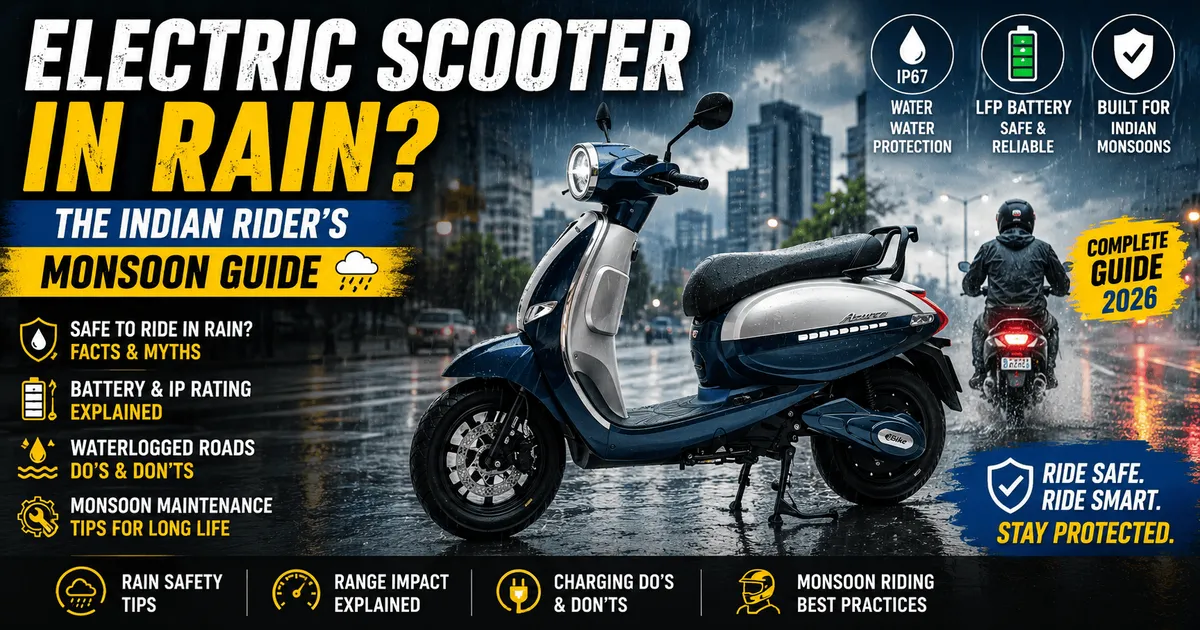
Here is the honest answer: yes, you can ride an electric scooter in the rain and for most Indian commuters during monsoon season, it is completely normal to do so. Modern electric scooters are built for real-world conditions, not just dry sunny days. The battery, motor, controller, and wiring are all designed with weather in mind.
But there is a line between riding in rain and riding through a flooded road, and knowing where that line is could save your scooter, and more importantly, you.
This guide covers everything you need to know as an Indian electric scooter owner heading into the 2026 monsoon season.
Is It Actually Safe to Ride an Electric Scooter During the Indian Monsoon?
Short answer: yes, for normal rain conditions.
The engineering behind today's electric scooters has come a long way from the early days when EVs were considered fragile. Manufacturers now design specifically for markets like India, where monsoon season can last four to five months and daily life cannot simply pause every time it rains.
Cities like Mumbai, Bengaluru, Delhi, Chennai, Hyderabad, Pune, Kolkata, and Ahmedabad all see consistent heavy rainfall during the season. Scooter manufacturers know their customers are commuting through all of it.
The real risks are not rainfall itself. They are standing water, poor road visibility, submerged potholes, and open drains that become invisible once a road floods.
Those factors affect petrol scooters just as much as electric ones.
When your scooter is properly maintained and you ride with reasonable care, electric scooters are dependable year-round commuters, monsoon included.
How Do Electric Scooters Handle Rainwater?
There is a common misconception that electricity and water are always a catastrophic combination. In unprotected electrical systems, yes, they can be. But modern electric scooters are specifically engineered to keep water away from anything electrical.
Here is how manufacturers protect critical components:
- Sealed battery compartments that prevent water intrusion under normal conditions
- Waterproof connectors on wiring and charging interfaces
- Enclosed hub or mid-drive motors with weather-resistant casings
- Protected controllers and ECUs sealed against splashing
- Battery Management Systems (BMS) that monitor conditions and respond to anomalies
With these protections in place, riding through light rain, moderate rain, wet roads, road spray, and normal puddles is considered within the normal operating range of most electric scooters sold in India today.
Rain Resistant vs Waterproof: Understanding the Difference
This distinction matters, especially when marketing materials can blur the lines.
A rain-resistant scooter handles rainfall, wet roads, and everyday monsoon commuting without issue. That is what most Indian electric scooters offer.
A waterproof scooter, in a technical sense, would need to survive extended submersion. That level of protection is not what consumer electric scooters are built for.
Rain resistant does not mean flood proof. Keep that in mind every time the roads start to look like rivers.
What Is an IP Rating and Why Does It Matter for Monsoon Riding?
When you are comparing electric scooters, you will often see specifications like IP65, IP66, or IP67 listed for the battery or motor. These numbers are not marketing labels. They are standardised ratings defined by IEC 60529, a global standard for how well equipment resists the entry of solids and liquids.
IP stands for Ingress Protection.
The first digit refers to dust resistance (rated 0 to 6). The second digit refers to water resistance (rated 0 to 9).
The higher each number, the stronger the protection.
Breaking Down Common Electric Scooter IP Ratings
IP65 - Protects against dust and low-pressure water jets from any direction. More than adequate for rain riding and road splashes.
IP66 - Adds protection against more powerful water jets. Good for heavy monsoon conditions.
IP67 - Protects against temporary immersion in water up to 1 metre deep for 30 minutes under controlled test conditions. This is what most premium Indian EV batteries are rated at.
For Indian monsoon riding, an IP67 battery gives you solid confidence that everyday rainfall will not damage your scooter. It does not mean you should test it by riding through a flooded underpass.
Always check the IP rating separately for the battery, motor, and controller because manufacturers sometimes list them differently.
Can Rain Actually Damage Your Electric Scooter Battery?
This is the question that worries most new EV buyers more than any other. The good news is that under normal use, modern batteries are built to handle rain exposure without issue.
LFP Batteries and Why They Suit Indian Conditions
Many electric scooters sold in India now use Lithium Iron Phosphate (LFP) battery chemistry. Compared to older lithium-ion formulations, LFP batteries offer:
- Better thermal stability in high-temperature and high-humidity environments
- Longer cycle life, often 2,000 cycles or more
- A stronger safety profile, particularly around thermal events
- Greater durability under real-world usage patterns
These properties make LFP particularly well suited to Indian weather, which combines heat, humidity, and heavy rain across different seasons.
Sokudo offers LFP batteries for safer and long term reliability.
When Can Water Actually Get Into a Battery?
Under normal riding conditions, water does not enter a properly sealed battery pack. Problems typically arise from:
- Physical damage to the battery housing from an accident
- Broken or degraded seals from improper servicing
- Riding through water deep enough to fully submerge the battery compartment
- Using high-pressure jet washes directly on sealed components
If your battery housing is intact and your scooter has a solid IP rating, everyday monsoon rain is not going to damage it.
Warning Signs to Watch After Heavy Water Exposure
If your scooter has been through unusually deep flooding, watch for:
- Charging failures or the charger not recognising the battery
- Warning lights on the dashboard related to battery or motor
- A sudden unexplained drop in range
- Any corrosion visible around connectors or terminals
- Error messages on the display
If you notice any of these after significant water exposure, take the scooter to an authorised service centre rather than trying to diagnose it yourself.
Can You Ride Through Waterlogged Roads?
This is where this guide needs to be direct with you.
Rain is fine. Flooded roads are a different matter entirely, and this applies to every vehicle, not just electric scooters.
How Deep Is Too Deep?
A practical rule: if the water level is approaching your floorboard or the base of your battery compartment, do not enter.
The problem is that flooded roads hide everything underneath them. What looks like 6 inches of water could be a two-foot pothole. Open drains that are normally visible become invisible. Road surfaces that have eroded are impossible to spot.
The Ministry of Road Transport and Highways consistently highlights waterlogged roads as one of the leading causes of monsoon accidents in India. This is not a problem specific to EVs.
What Happens If Water Reaches the Motor?
Most motors in modern electric scooters are rated to handle water splashing during normal riding. Prolonged exposure to deep water is a different situation. It can lead to:
- Bearing corrosion over time
- Electrical faults within the motor windings
- Increased wear on internal components
- Reduced efficiency and power output
When Should You Just Not Ride?
Skip the ride entirely if:
- Roads are heavily flooded with water flowing across them
- The water depth is unclear or unknown
- Visibility is low enough to be genuinely dangerous
- You cannot identify where the road ends and a drain begins
No commute is worth a serious accident. Pull over, wait it out, or find an alternate route.
Electric Scooter vs Petrol Scooter in Monsoon: Which Is Better?
Many riders assume a petrol scooter is the safer or more practical option during monsoon season. The reality is more nuanced.
Traction and Handling
Traction during rain depends almost entirely on tyre quality, road surface, and rider behaviour. An electric scooter on quality tyres handles wet roads just as well as a petrol scooter on equivalent rubber. Neither has a significant inherent advantage here.
Braking
Modern electric scooters increasingly come with disc brakes, combined braking systems, and regenerative braking. These provide consistent, predictable stopping performance in wet conditions. Older drum-only setups, which are still common on budget petrol scooters, can be less reliable when wet.
Maintenance Load During Monsoon
Here is where electric scooters have a clear advantage. A petrol scooter needs oil checks, air filter cleaning, spark plug inspections, and fuel system attention after heavy monsoon use. An electric scooter eliminates all of that. Fewer moving parts means less to maintain and fewer things to go wrong during the season.
Overall Reliability
A well-maintained electric scooter is at least as reliable as a well-maintained petrol scooter during monsoon, and in many ways simpler to keep running.
10 Safety Tips for Riding Your Electric Scooter in the Rain
These apply whether you are navigating the streets of Bengaluru's Koramangala or cutting through Delhi's morning traffic.
1. Slow down early. Wet roads increase stopping distances significantly. Give yourself more space and more time.
2. Brake progressively. Sudden braking on wet surfaces is the fastest way to lose traction. Squeeze rather than grab.
3. Check tyre pressure weekly during monsoon. Pressure drops affect grip. Under-inflated tyres are dangerous on wet roads.
4. Keep your headlight on, always. Not just for you to see, but for other vehicles to see you. Road visibility is one of the top causes of monsoon accidents.
5. Take corners gently. Lean into turns gradually. Do not lean sharply or accelerate through a bend on wet tarmac.
6. Avoid flooded roads regardless of how passable they look. See the previous section.
7. Wear high-visibility clothing. A reflective jacket costs very little and makes a real difference in low-light wet conditions.
8. Inspect your brakes more frequently. Wet weather accelerates brake pad wear. Check them every few weeks during heavy rain seasons.
9. Let the scooter dry before charging. After particularly heavy rain, give the charging port and surrounding area 15 to 20 minutes to dry before plugging in.
10. Park under cover whenever possible. It reduces long-term wear, especially on tyres, seals, and exposed metal components.
Does Rain Actually Reduce Your Electric Scooter's Range?
Yes, slightly, and it is completely normal. Most riders notice this and wonder if something is wrong. It is not.
Rain itself does not damage battery performance. What does affect range is everything that comes with rain:
- Wet roads create more rolling resistance, which means the motor works slightly harder
- Stop-and-go traffic increases during heavy rain as visibility drops and drivers slow down
- Braking frequency increases, which draws more power even with regenerative braking
In real-world Indian conditions, most riders see a range reduction of around 5 to 15 percent during monsoon conditions compared to dry weather riding. If you normally get 70 km on a full charge, expect 60 to 66 km during a wet commute.
Plan accordingly, and do not push to the last few kilometres of range on a rainy day.
Monsoon Maintenance Checklist for Electric Scooter Owners
A little regular attention during the rainy season goes a long way in preventing problems that are entirely avoidable.
After heavy rain rides: Wipe down the scooter, especially around the charging port, battery area, and any exposed metal brackets. Remove mud and debris from the underside where it can trap moisture.
Weekly during monsoon: Check tyre pressure. Inspect brake pads for wear. Look over any exposed bolts or fasteners for early signs of rust. A quick spray of WD-40 on fasteners and hinges is worth doing.
Charging port hygiene: Keep it clean and dry. If dirt or water gets inside the port, let it dry completely before charging. Never force a connector into a wet port.
What to avoid: Do not use a high-pressure jet wash on your scooter, and particularly not aimed directly at seals, the battery area, charging port, or motor. A cloth and a bucket of water is safer.
Check battery connections periodically: If you are comfortable doing so, or take it to a service centre, have battery terminals checked for any early corrosion. Catching it early prevents bigger problems.
Sokudo Electric Scooters and Monsoon Readiness
Sokudo designs its scooters specifically around Indian riding conditions, including the demands of the monsoon season. The range uses LFP battery technology,
which offers better thermal stability and a longer lifespan than older lithium-ion formulations, along with sealed battery systems designed to handle everyday rain exposure.
If you are looking at a Sokudo scooter for monsoon commuting, here is a quick overview of the range:
Sokudo Plus covers up to 80 km real world range per charge, making it a strong option for daily city commuting.
Sokudo Acute 2.2 offers up to 100 km of range with a practical balance of performance and efficiency, well suited to varied urban commuting distances.
Sokudo Rapid 2.2 is built for riders covering longer routes who want more comfort and capability across different road conditions.
Sokudo Acute suits high-mileage commuters who need maximum flexibility for daily use.
Frequently Asked Questions
Can electric scooters get wet in rain?
Yes. Modern electric scooters are designed to handle normal rain and wet road conditions. Riding in rain is considered normal use.
Can I charge my electric scooter after riding in rain?
Yes, but ensure the charging port and surrounding area are completely dry first. Waiting 15 to 20 minutes after heavy rain is a good habit.
What happens if water enters the motor?
Light splashing during riding is generally fine given standard IP ratings. If the motor is submerged in deep water, corrosion and faults can develop over time. Take the
scooter to a service centre for inspection.
Are electric scooters waterproof?
Most are water-resistant, not waterproof. Water-resistant means they handle rain and splashing. Waterproof would mean surviving extended submersion, which most consumer scooters are not designed for.
Can electric scooters handle the Indian monsoon?
Yes, when ridden responsibly and maintained correctly through the season.
Does rain reduce electric scooter range?
Typically by 5 to 15 percent due to road resistance and traffic conditions, not battery damage.
How much rain is too much for an electric scooter?
If roads are flooded or water depth is uncertain, avoid riding. Rain itself is fine. Floodwater is not.
Final Thoughts: Should You Ride Your Electric Scooter in the Rain?
Yes, you should, and in most cases you have nothing to worry about.
Modern electric scooters are built to handle Indian monsoon conditions. The battery is sealed. The motor is protected. The electrics are designed with weather in mind. For the vast majority of daily commutes in India, rain is just another condition the scooter handles as part of normal use.
What you do need to respect is the difference between riding in the rain and riding through a flood. The former is fine with a bit of care. The latter is dangerous for any vehicle and any rider.
Choose a scooter with a strong IP rating, keep up with basic monsoon maintenance, stay off flooded roads, ride a little slower in the wet, and let the charging port dry before you plug in. That is genuinely all it takes.
Electric scooters have become one of the most practical, economical ways to get around Indian cities. The monsoon does not change that. A little awareness and a sensible approach to riding keep you safe and your scooter running well throughout the season and long after it.
The rain is coming either way. Might as well ride confidently through it.
For more on electric scooter ownership in India, see our guides on how to extend electric scooter battery life, the best electric scooters for daily commute in 2026, and electric scooter vs petrol scooter: total cost of ownership.
Comments
Share your thoughts about this article.
Loading comments...